机器人电缆使用要满足哪些要求呢英语怎么说,机器人的电线长什么样
When it comes to the use of robot cables, there are a series of strict requirements that need to be met to ensure the proper functioning and longevity of robots. These requirements cover multiple aspects, including electrical performance, mechanical properties, environmental adaptability, and safety.
In terms of electrical performance, the most fundamental requirement is to ensure stable power transmission. Robots often have various electrical components that need a stable power supply to operate correctly. The cable must have low resistance to minimize power loss during transmission. High - resistance cables can lead to overheating, which not only wastes energy but also poses a safety hazard. Additionally, the cable should have good insulation properties. Insulation prevents electrical leakage, which could damage the robot's internal components or even cause electric shock accidents. The insulation material should be able to withstand the rated voltage of the robot's electrical system without breaking down. For example, in high - voltage industrial robots, the cable insulation must be carefully selected to ensure it can handle the high - voltage environment.
.jpg)
Another important aspect of electrical performance is signal transmission. Many modern robots rely on complex control systems that use signals to communicate between different parts. The cables used for signal transmission need to have low attenuation and interference resistance. Low attenuation ensures that the signal strength remains sufficient over the length of the cable, so that the control commands can be accurately transmitted. Interference resistance is crucial because in industrial environments, there are often various electromagnetic fields that can disrupt the signal. Shielded cables are commonly used to protect the signal from external interference. For instance, in a factory with a lot of electrical equipment, shielded signal cables can prevent the robot's control signals from being distorted by the electromagnetic noise generated by other machines.
Mechanical properties are also of great significance. Robot cables are often subjected to repeated bending, twisting, and stretching during the robot's operation. Therefore, they need to have high flexibility. A flexible cable can easily adapt to the robot's various movements without breaking or losing its electrical performance. The cable's outer sheath should be made of a durable material that can resist abrasion. In industrial settings, the cable may rub against other objects or surfaces, and an abrasion - resistant sheath can protect the internal conductors. Moreover, the cable should have good tensile strength. When the robot moves, the cable may be pulled, and a cable with high tensile strength can withstand the pulling force without being damaged. For example, in a robotic arm that moves in multiple directions, the cable needs to be able to endure the mechanical stress caused by the arm's movements.
Environmental adaptability is a key factor as well. Robots can be used in a wide range of environments, from clean rooms to harsh industrial settings. In high - temperature environments, the cable's insulation and sheath materials need to be heat - resistant. High temperatures can cause the insulation to degrade, leading to electrical problems. On the other hand, in cold environments, the cable should remain flexible and not become brittle. Cold - resistant cables are designed to maintain their mechanical and electrical properties even at low temperatures. In addition, some robots are used in wet or corrosive environments. In such cases, the cable needs to be waterproof and corrosion - resistant. Special coatings or materials can be used to protect the cable from moisture and chemical corrosion. For example, in a food - processing factory where there is a lot of water and cleaning agents, the robot cables need to be able to resist the corrosive effects of these substances.
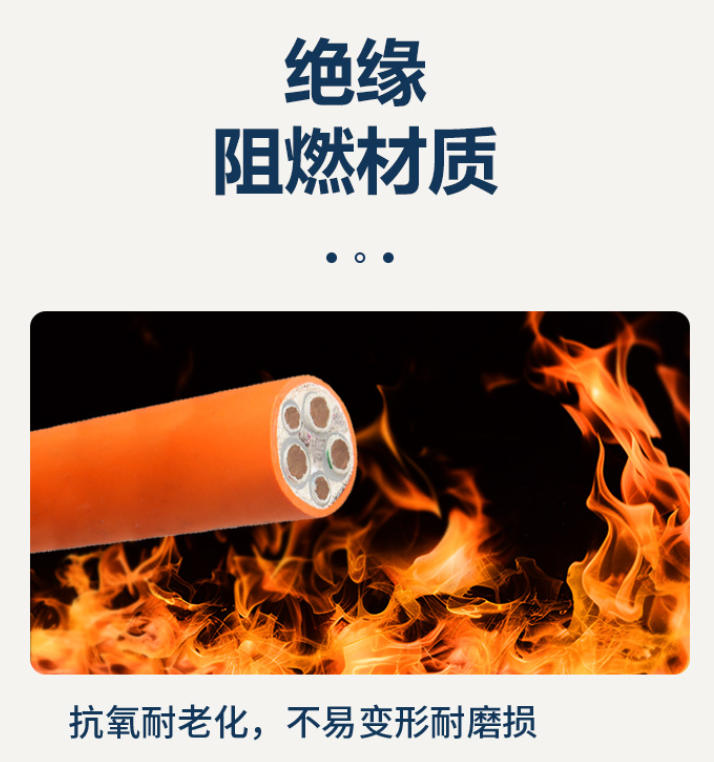
Safety is always a top priority. Robot cables must comply with relevant safety standards. They should be fire - resistant to prevent the spread of fire in case of an electrical fault. Flame - retardant materials are commonly used in cable manufacturing to meet this requirement. The cable should also be designed to prevent short - circuits. Proper insulation and conductor arrangement can reduce the risk of short - circuits, which can cause damage to the robot and pose a danger to the operators. Moreover, the cable should be clearly marked with information such as its rated voltage, current capacity, and other technical parameters. This helps the users to correctly select and use the cable, ensuring the safe operation of the robot.
In conclusion, the use of robot cables requires meeting a comprehensive set of requirements in terms of electrical performance, mechanical properties, environmental adaptability, and safety. Only by meeting these requirements can the cables ensure the reliable and safe operation of robots in various applications.